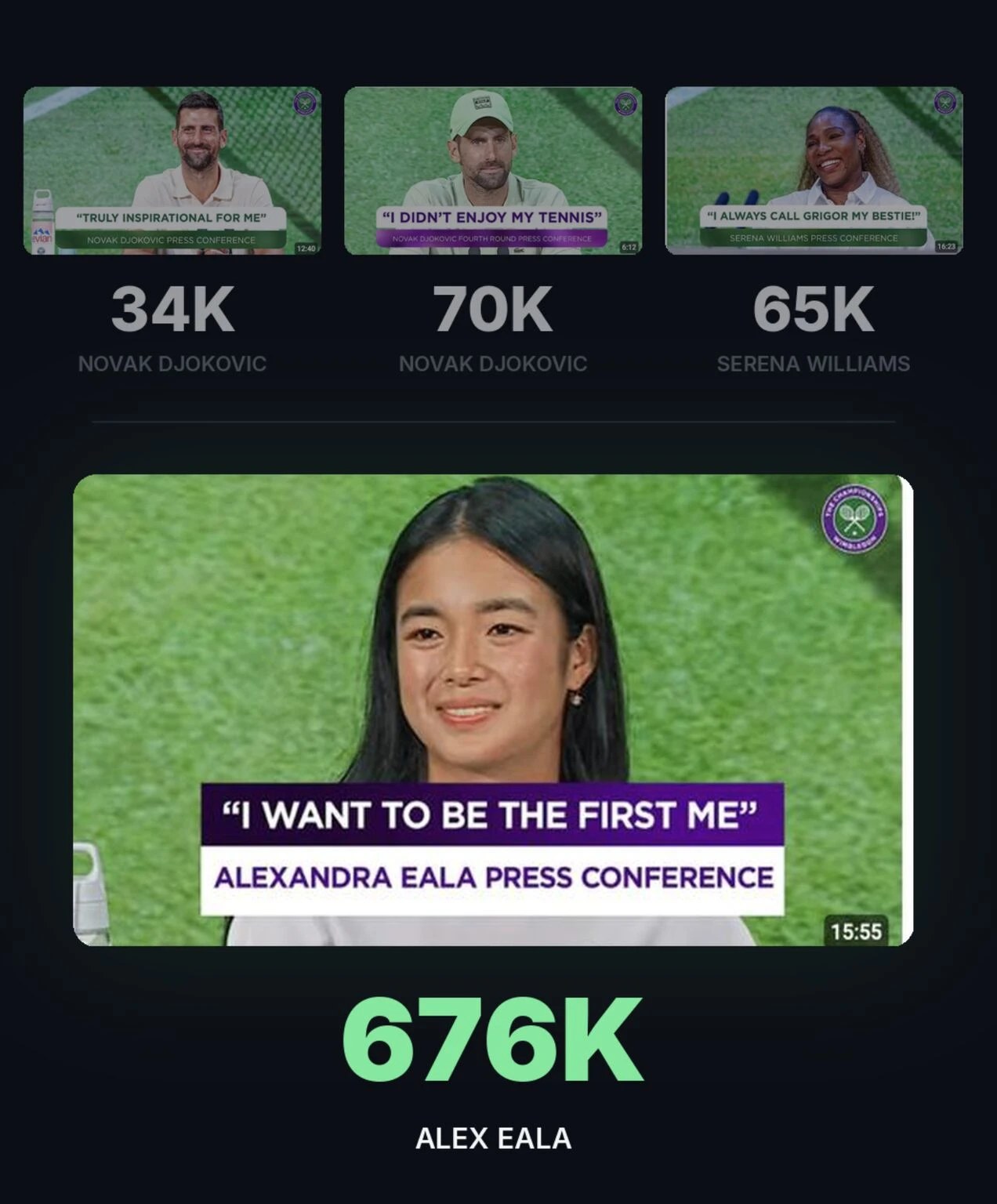
At Wimbledon this year, the most watched press conference didn't belong to Novak Djokovic. His did 70,000 views. Serena Williams, on her comeback, did 65,000. Alex Eala did 676,000.
The press conference that told the story
Ten times Serena. And Eala's talent is real: she beat defending champion Iga Swiatek at those Championships, won her first WTA title in September and reached a career-high ranking of 18. But talent doesn't explain a tenfold gap in attention.
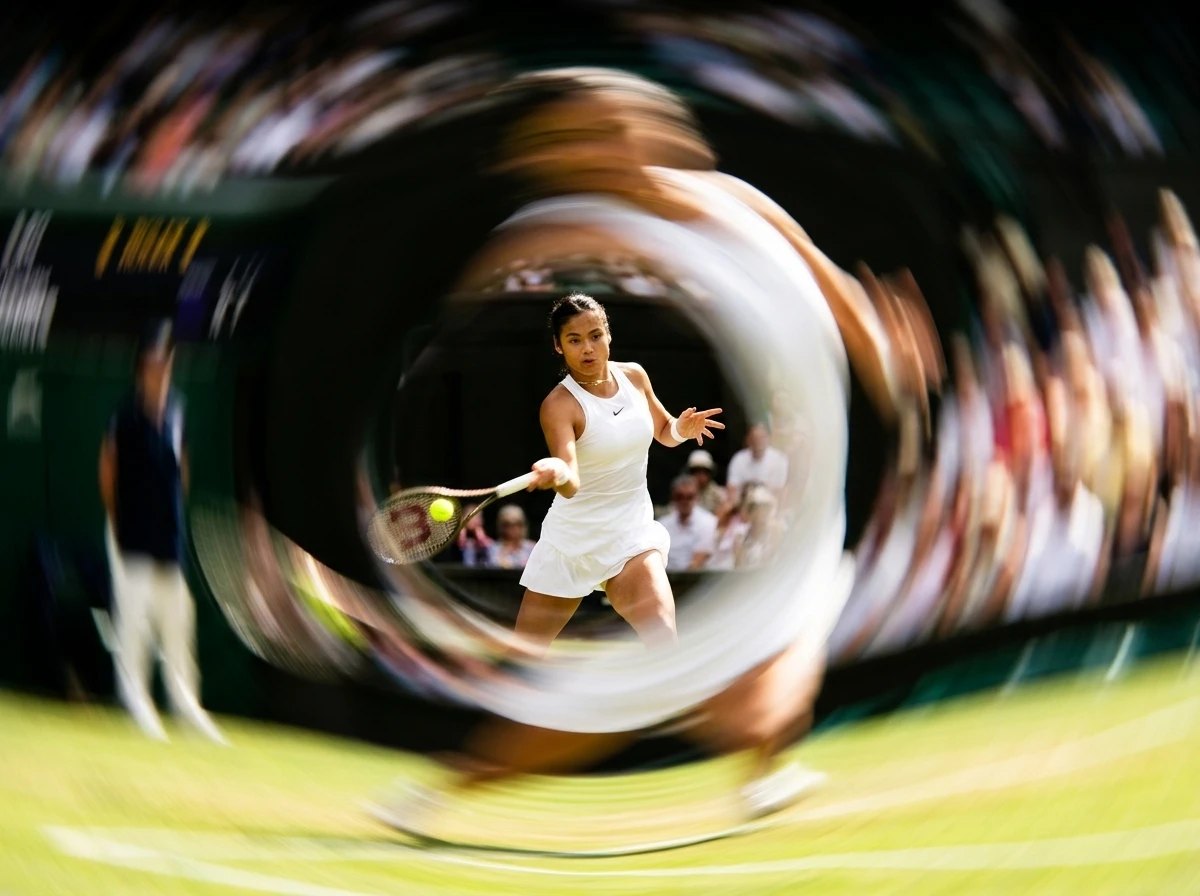
Eala is the first Filipino player to break through, and around ten million Filipinos live across the globe. At the Australian Open in January, her first-round match was on Court 6, an outside court that holds 1,500 people. The queue stretched for several hundred metres, back towards Rod Laver Arena.
Nobody marketed that queue into existence. It had been forming for decades, waiting for somewhere to stand.
What dormant demand is
I call this dormant demand: passion that's fully formed but has never been given a product. The fans already care. They just haven't been offered anything to watch, buy or join.
They follow a player. They watch the press conference clip. They wear the shirt because it looks good. They know the rivalry from the group chat. Many have never sat through a full match. That isn't a lack of demand. It's demand with nowhere to go.
Why nobody sees it
It's easy to miss, because viewing figures can only measure fans who've already been served. The audiences everyone can see get valued precisely. The audiences nobody has met yet don't appear anywhere, right up until they look like a queue on an outside court.
Sport is very good at counting the people who turn up: tickets, viewers, subscribers, followers of the official account. It is much worse at counting the people who care but have never been given a way in.
The World Cup proved it
When the World Cup grew to 48 teams, a lot of people called it dilution. Then Uzbekistan arrived with 38 million people who had waited 34 years, and Cape Verde turned into a carnival. Entire countries adopted the tournament at once.
The expansion didn't create those fans. They were already there. The tournament finally gave them somewhere to stand.
Existing fans watch. First-time fans queue.
You can see it everywhere
When Caitlin Clark moved to the WNBA, people who had never watched women's basketball tuned in to watch her. Cristiano Ronaldo has more than 600 million followers on Instagram, and only a small slice of them watch the league he plays in. In both cases the interest came first, and it was attached to a person.
A press conference line, a tunnel fit or a reaction shot can travel further than the match it came from. The attention is real. It just isn't pointed at the product yet.
Why it stays asleep
- 01
Sport sells the fixture. People buy the person.
Most sport marketing leads with dates, times and kick-offs. New fans are drawn to personalities, rivalries and stories.
- 02
The door is the wrong size.
Ninety minutes, a subscription and a rulebook is a lot to ask of someone who is only curious.
- 03
It lives in the wrong place.
A sport's own channels mostly reach people who already follow the sport. The dormant fans are somewhere else.
How to wake it up
- 01
Find it
Look outside your own numbers. Who follows your players but not you? What gets searched, clipped and shared? Where are the queues forming?
- 02
Name who they are
Work out who they are and what they love: a country, a community, an artist, a creator, a national hero. That is where they spend their time.
- 03
Build a smaller door
Don't start with the full match. Start with a clip, a fit, a creator series, a shorter format. Something they can say yes to today.
- 04
Give them a reason to come back
A story with a next episode. A weekly ritual. A side to be on. That is how curiosity turns into a habit.
Finding the door is the next idea: culture is the side door. Who you send through it is the third: idols sell, influencers inform.
Measuring it
I'm building a simple, public measure of dormant demand: how many people follow and search for a sport's people, compared with how many watch the sport. It will be built only from public numbers, and I'll publish it here once a year. The first edition is in the works.
The most exciting work in sport right now isn't fighting for the audiences everyone can already see. It's finding the ones nobody has measured yet.